Every Salesforce capability is now an API, an MCP tool, or a CLI command. No login required. Here’s what that means for your business and what Keonos is doing about it.
A Question That Became a Product
At TrailblazerDX 2026 in San Francisco on April 15, Salesforce co-founder Parker Harris asked out loud: “Why should you ever log into Salesforce again?”
That wasn’t a provocation. It was product direction. And the answer arrived the same day in the form of Salesforce Headless 360, the most significant architectural shift in the platform’s 25-year history.
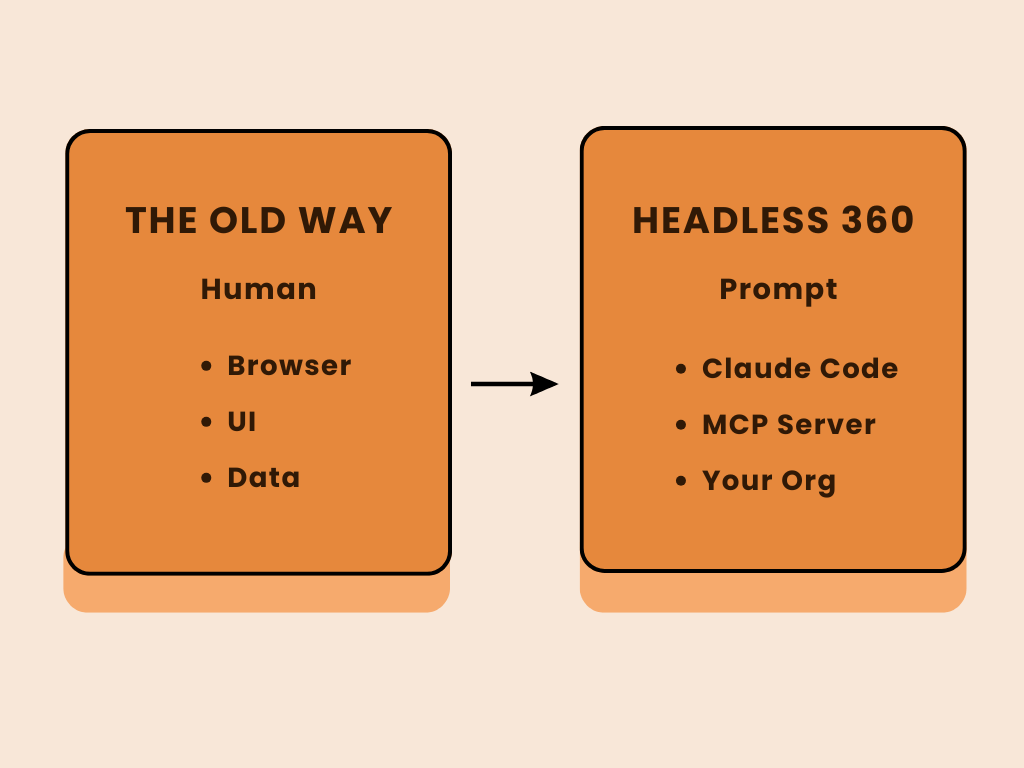
For 25 years, using Salesforce meant working inside Salesforce – a browser, a login, a human clicking through screens. Headless 360 ends that assumption entirely. AI agents don’t navigate UIs. They call APIs, invoke tools, and execute commands. Salesforce has rebuilt itself around that reality.
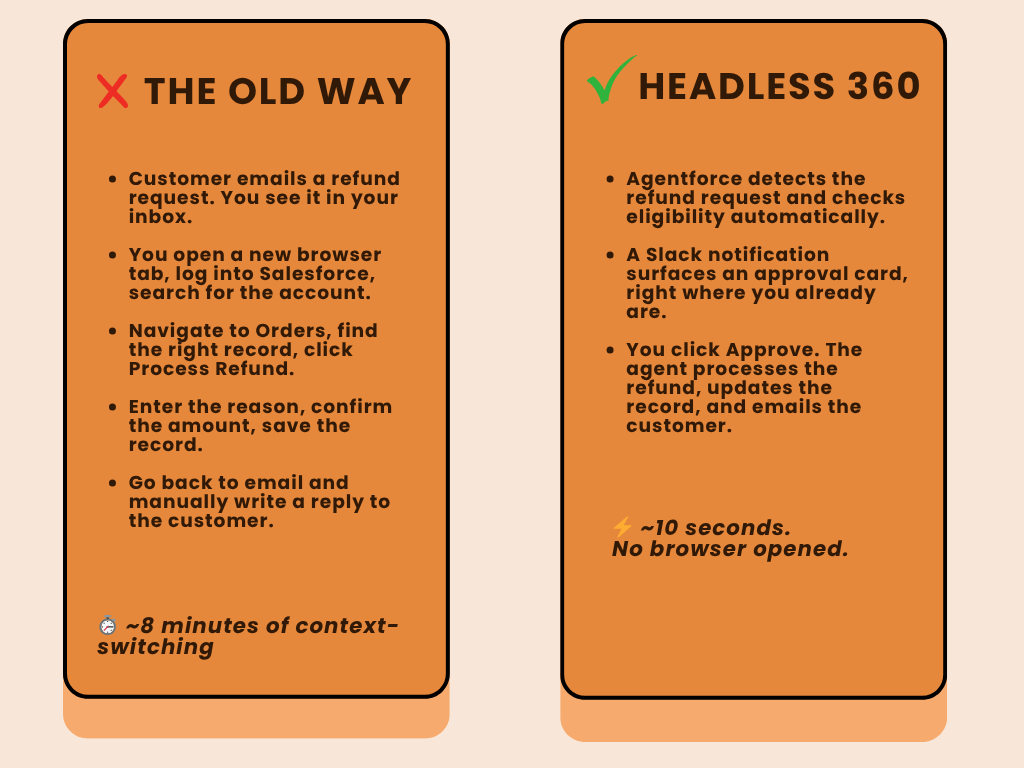
Before vs. After: A Real Workflow
Numbers only land when you see them in context. Here’s how a routine task, a customer refund request, looks before and after Headless 360.
What Headless 360 Actually Is?
The premise is elegant: every capability inside Salesforce: CRM records, workflows, business logic, Data Cloud, Agentforce agents, Slack is now exposed through three access patterns that don’t require a human in a browser.
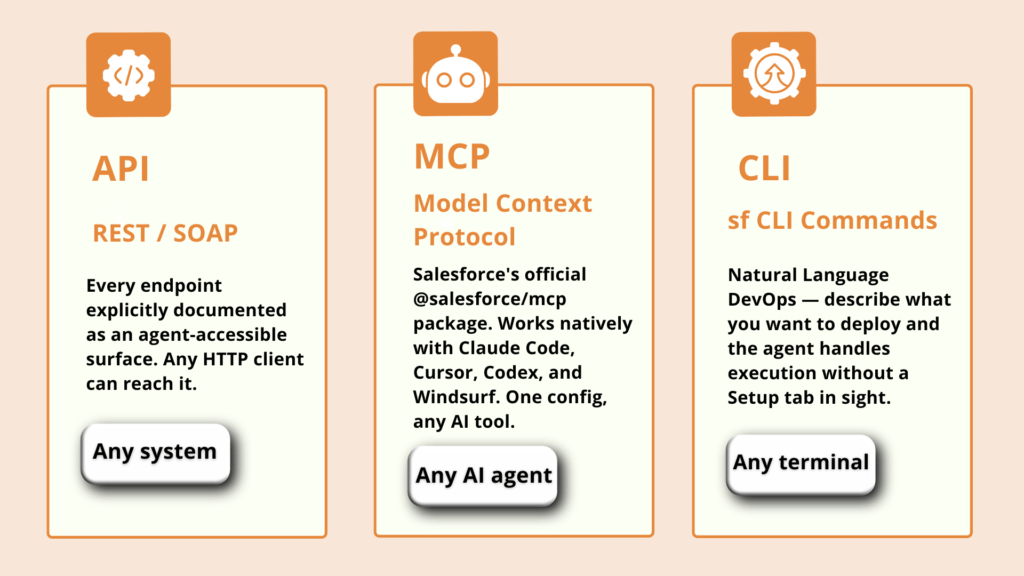
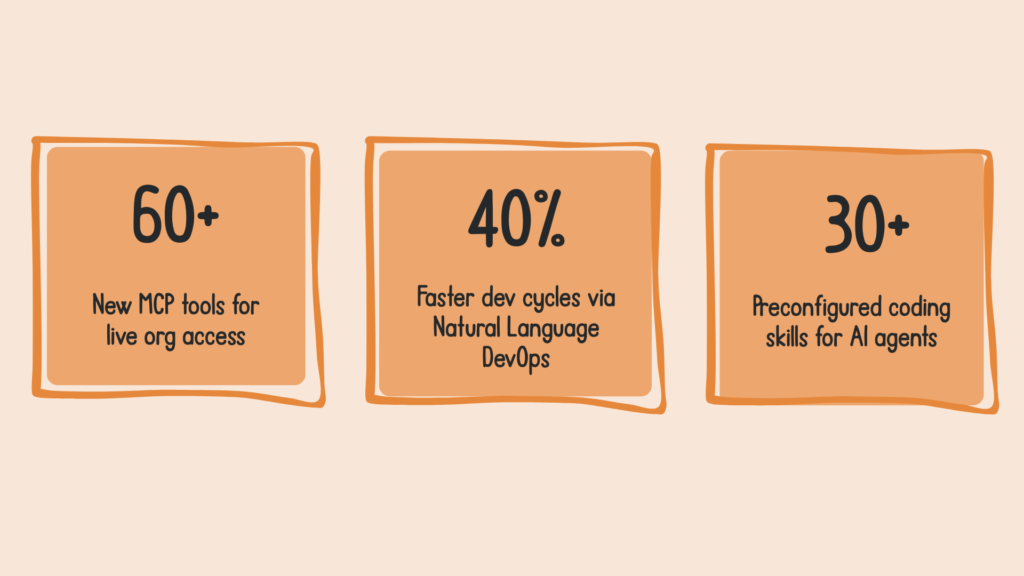
The MCP layer is genuinely new. Salesforce has had REST and SOAP APIs since 2006. What Headless 360 adds is intent: 60+ tools organised into named toolsets that a coding agent can call without writing custom integration code. That didn’t exist twelve months ago.
The 3 Pillars in Practice
1. Build Any Way You Want
Developers stay inside VS Code. Claude Code, Cursor, Codex, and Windsurf all connect to a live Salesforce org via a single 8-line .mcp.json config. Agentforce Vibes 2.0 adds multi-model support – Claude Sonnet and GPT-5 with full org awareness from the first prompt. The DevOps Center MCP compresses the build-test-deploy loop into a single conversational experience.
// .mcp.json — the only config you need
{
  "mcpServers": {
    "salesforce-dx": {
      "command": "npx",
      "args": ["@salesforce/mcp", "--target-org", "YourOrgAlias"]
    }
  }
}
2. Deploy on Any Surface
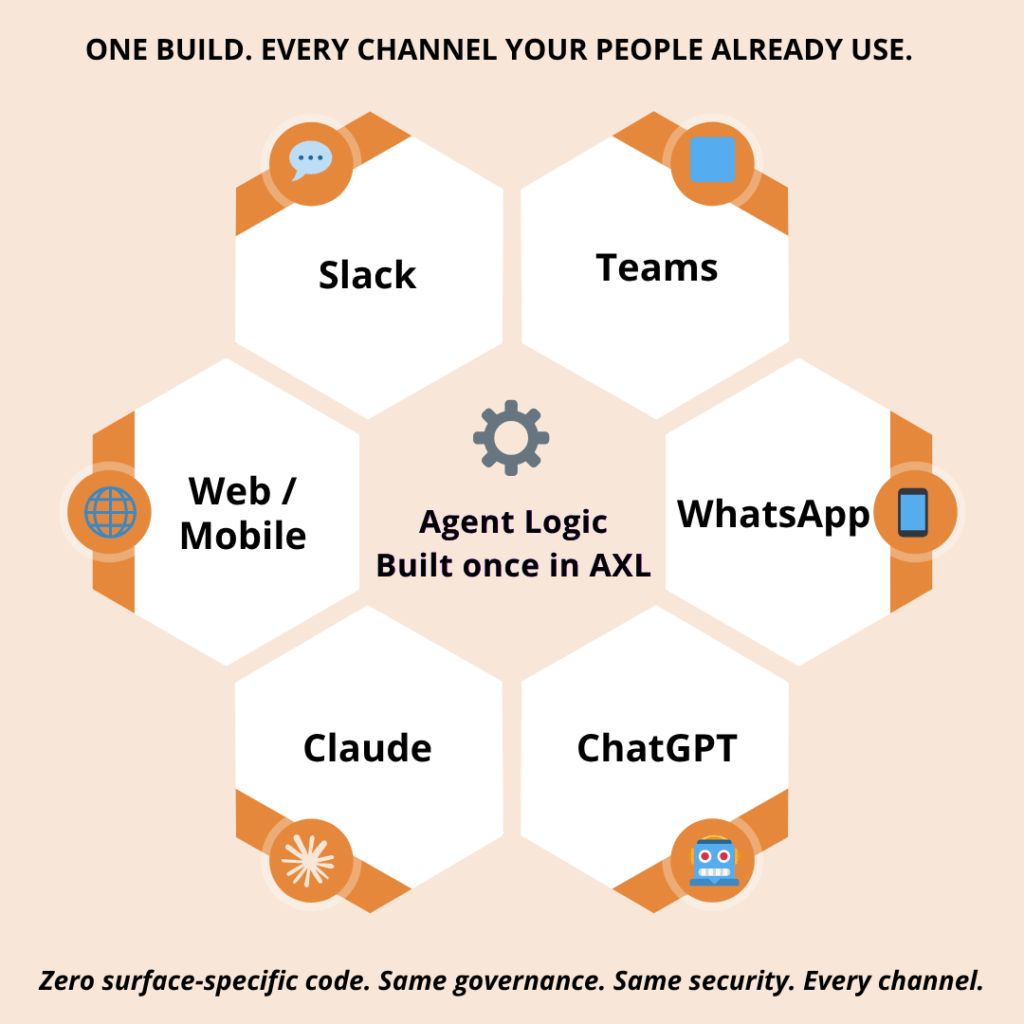
The Agentforce Experience Layer (AXL) is a new UI service that separates what an agent does from how it appears. Build an agent interaction once – approval cards, decision tiles, rebooking workflows and it renders natively inside Slack, Teams, WhatsApp, ChatGPT, Claude, Gemini, or any MCP-compatible client. No surface-specific code. One build, everywhere your people already work.
3. Trust at Scale
The governance toolset is the most underreported part of this launch. Agent Script (now open source) lets you define exactly when an agent uses LLM reasoning versus deterministic logic. Testing Center, Session Tracing with OpenTelemetry, and A/B Testing APIs mean you can evaluate and tune agent behaviour across the full lifecycle, before launch, in production, and after incidents.
4. How the MCP Flow Actually Works
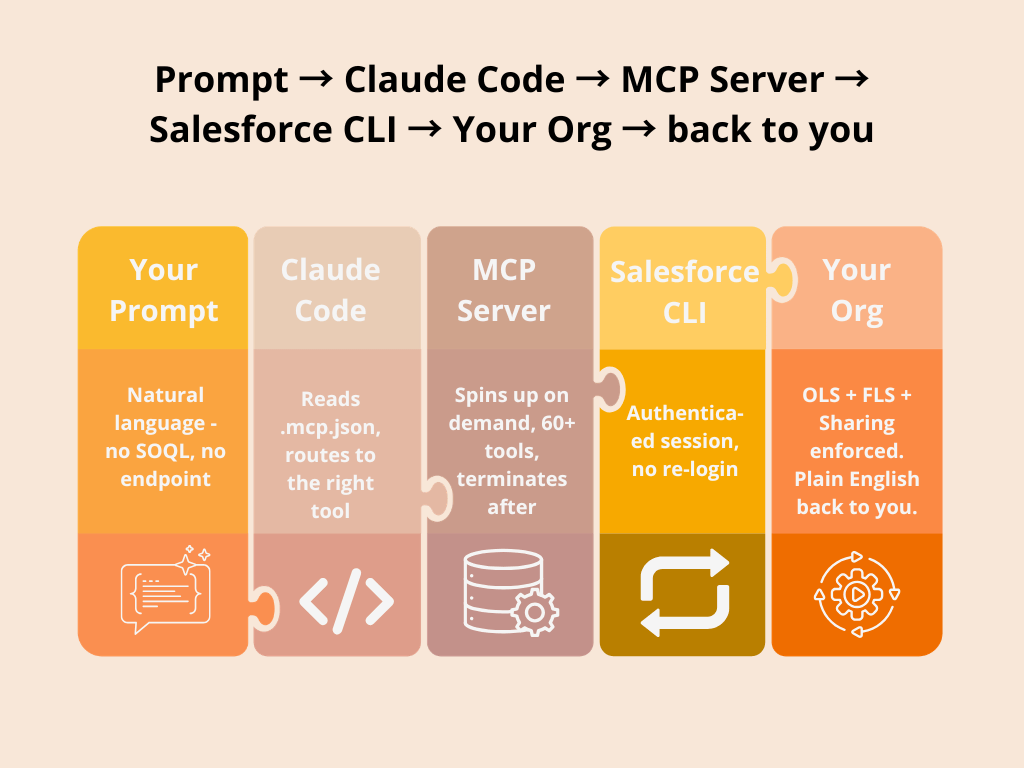
You type a natural language prompt. Claude Code reads .mcp.json, spins up the MCP server on demand, and routes the call through the Salesforce CLI using your authenticated session, no re-login required. Your org executes the request, applies OLS, FLS, and sharing rules, and sends the result back as plain English. The MCP server then terminates. Total round-trip: under 2 seconds. No browser. No context-switch.
The Architecture Shift That Experts Are Missing
Most Headless 360 coverage focuses on developer tooling. The more profound change is architectural: Salesforce has moved from a monolith where UI, data model, business logic, and workflow were tightly coupled, to a runtime where the interface is just one client among many.
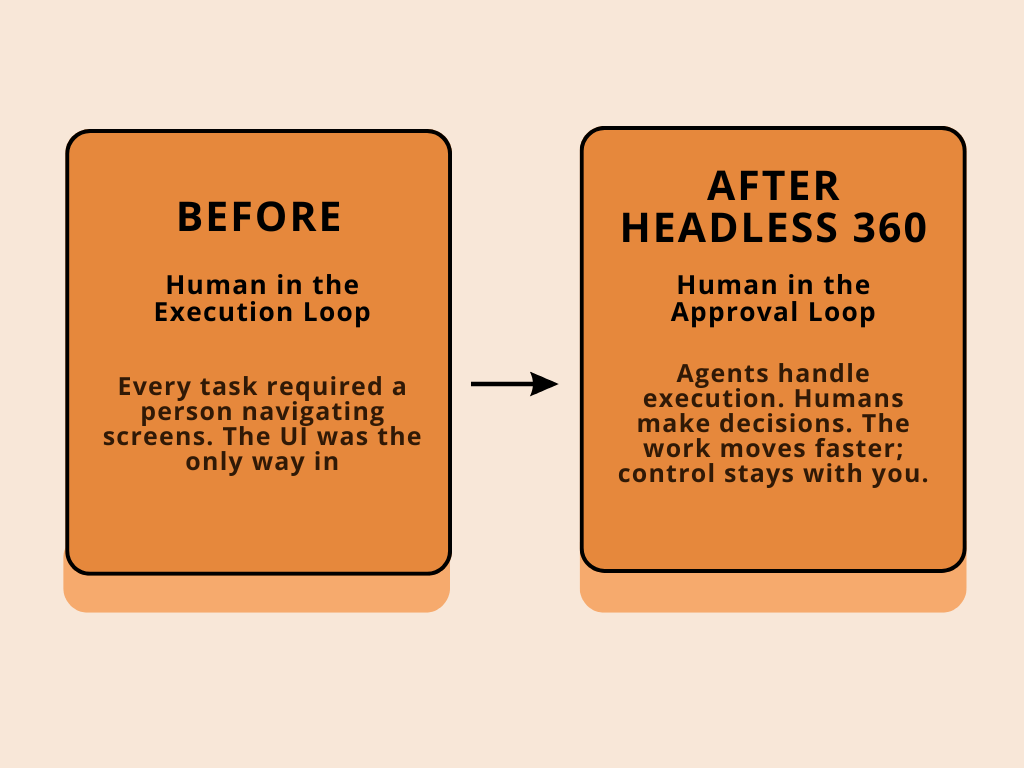
This isn’t about removing people from the process. It’s about putting them where their judgment matters, not where their clicks are just moving data. The agent executes within the same guardrails as the user, because it’s calling the same contract.
Myths Worth Busting
The most common objections we hear from clients evaluating Headless 360 and the accurate answers.
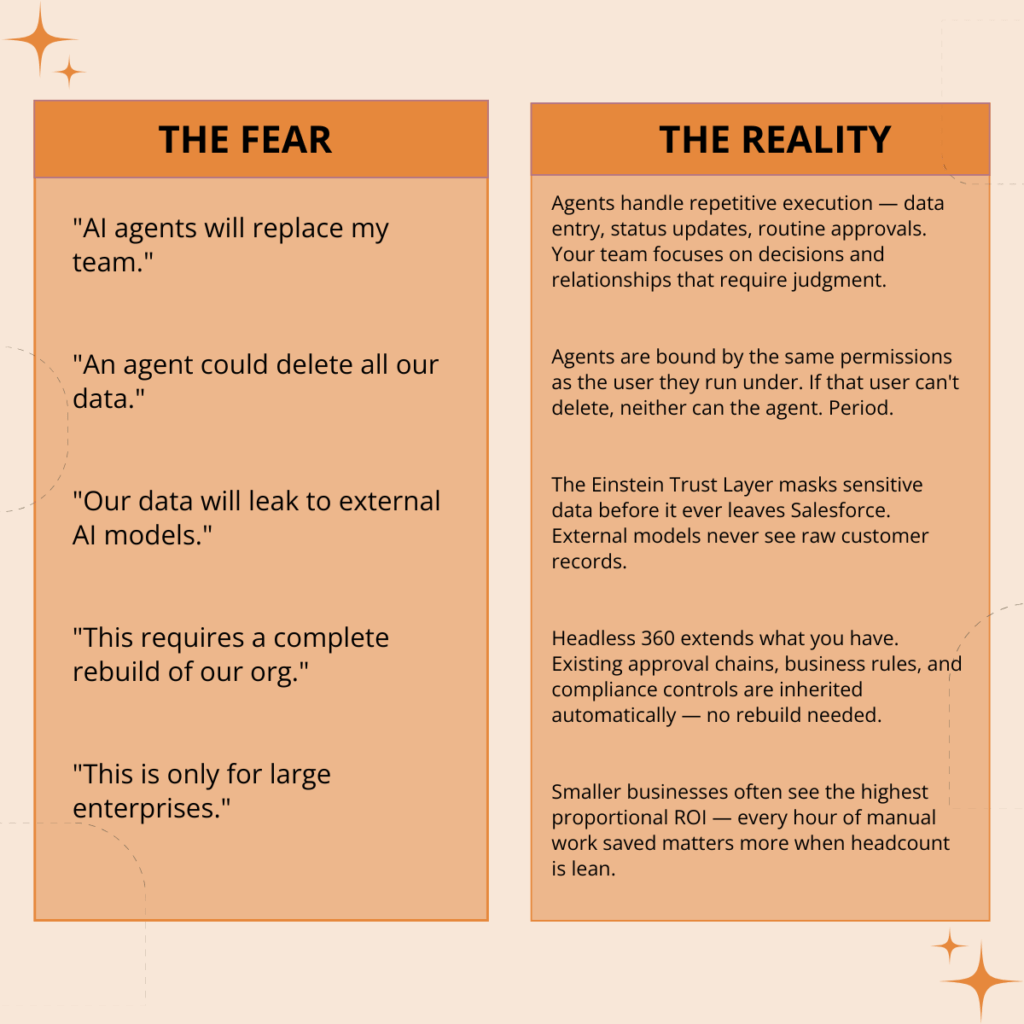
“But Can an Agent Bypass Our Security?”
This is the first question every IT and compliance team asks. The architecture makes it structurally impossible. MCP authenticates via Salesforce CLI using your user session. Every request inherits your org’s existing permission model.
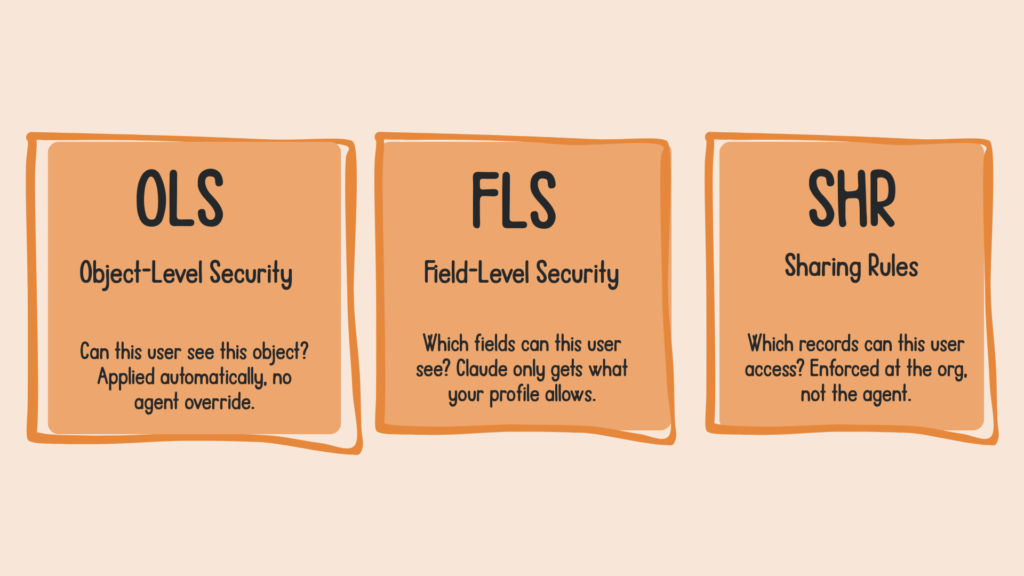
“In most platforms, you rebuild the trust layer from scratch every time you deploy something new. In Salesforce, it is already there.” — Salesforce, TDX 2026
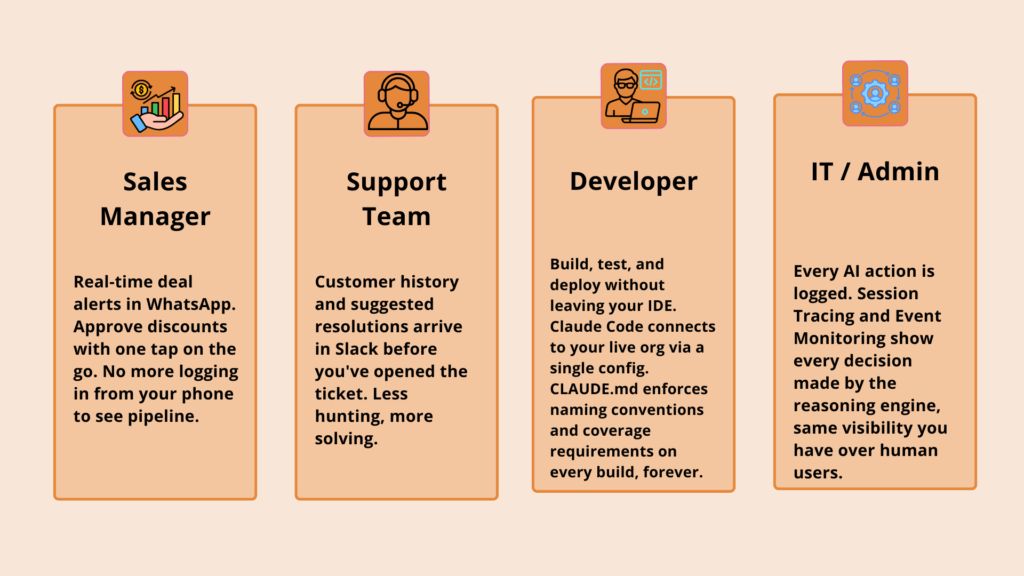
What It Means by Role?
Headless 360 touches different people differently. Here’s the practical read for each stakeholder.
What This Means for Keonos Clients & Partners
Headless 360 isn’t a feature you toggle on; it’s a platform shift that changes how Salesforce projects are scoped, built, and maintained.
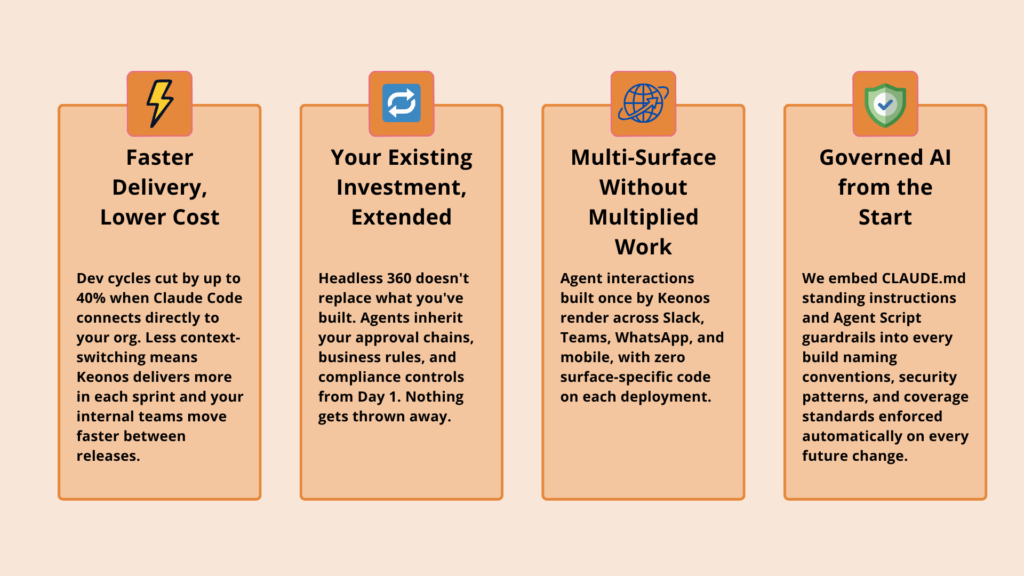
How Keonos is Leveraging Headless 360?
Our delivery teams began hands-on work with the Salesforce MCP toolset at TDX 2026. We ran a live internal workshop connecting Claude Code to a real Salesforce org, deploying governed Apex with AI-enforced naming conventions, and validating 85%+ test coverage without leaving the IDE.
Practically, this means three things for our clients going forward:
Faster onboarding. We configure .mcp.json and CLAUDE.md once per project, every developer and every AI tool from that point forward operates with identical, pre-approved rules. No repeated tribal knowledge transfers.
Consistent code quality. Naming prefixes, ‘with sharing’ enforcement, bulk-safe patterns, and minimum coverage thresholds are embedded as standing instructions not policed in code review.
Agentic workflow design. For clients ready to deploy Agentforce agents across Slack, Teams, or voice channels, we design the Experience Layer architecture so you build once and render everywhere without creating a new code branch for each surface.
One honest caveat: Salesforce has not yet disclosed enterprise pricing for Headless 360 capabilities beyond the free Developer Edition. Analyst community is asking the right question, CIOs should clarify cost tiers before building architectural dependencies. Keonos will guide clients through this as pricing becomes clear through 2026.
Did you find this blog helpful?